What’s the Maximum Current Capacity of an Electric Wire? Electric Wire
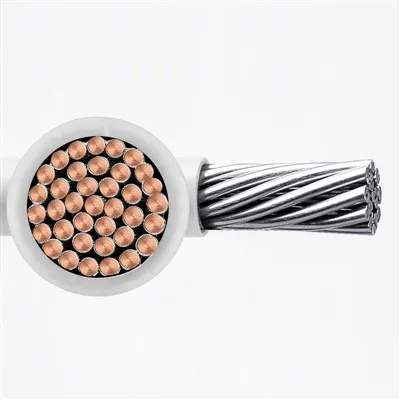
If you’ve ever stood in a hardware store staring at a wall of electrical wires, trying to pick the right one for a project—whether it’s a new garage outlet, a solar panel setup, or just replacing a frayed extension cord—you’ve probably asked this question: what’s the maximum current a wire can handle without melting, catching fire, or going all wonky on you? As a wire supplier, I get this question every single day, and it’s way more complex than just “bigger is better.” Let me break this down straight, no fancy jargon, and tell you what actually matters.
First off, let’s get one thing out of the way: maximum current capacity isn’t a one-size-fits-all number. You can’t just grab a 14-gauge wire and say “this does 15 amps” like it’s a law that never changes. That number depends on a bunch of factors, and ignoring them is how you end up with things like overheated walls, tripped breakers, or even worse.
The biggest factor is gauge, right? Wire gauge is the thickness of the metal conductor—specifically copper or aluminum, which are the two main metals we use (I’ll get to that in a sec). The lower the gauge number, the thicker the wire. A 10-gauge wire is fatter than 14-gauge, so it can carry more current. That makes sense because thicker wires have more space for electrons to flow, and they don’t heat up as much when you’re pushing a lot of power through them. But here’s the catch: even two wires with the same gauge can have different max currents depending on what they’re insulated with, how they’re installed, and what kind of environment they’re in.
Let’s talk about insulation first. The insulation around a wire isn’t just there to keep you from getting shocked—it’s what determines how much heat the wire can handle. If your wire is wrapped in thin, cheap plastic, it’s going to melt at a lower temperature than wire with heavy-duty insulation meant for outdoor use or industrial jobs. For example, a regular 14-gauge Romex wire (the kind you use for indoor household outlets) has a max current of around 15 amps, but if you use that same 14-gauge wire as THHN (the heat-resistant stuff we sell for outdoor and conduit runs), it can handle up to 20 amps. That’s a huge difference just from changing the insulation. I’ve seen so many people mix those two up and end up with a wire that’s way too weak for their setup.
Next up: how the wire is installed. If a wire is tucked away in a wall by itself, it can dissipate heat way easier than if it’s bunched up with 10 other wires in a conduit or a cable tray. All those wires generate heat when current flows, and if they can’t escape, that heat builds up. So a 10-gauge wire that’s alone has a max of like 30 amps, but if it’s crammed into a group of three or four, that number drops to 25 or even 20. I always tell contractors and DIYers alike: if your wires are packed tight, go up a gauge. No exceptions. And don’t forget about temperature. If you’re running a wire in a hot attic where it can hit 140°F in the summer, its max current goes down too. The insulation can’t take as much heat, so you’ve got to dial back the amps to keep things safe. Aluminum vs. copper is another big one. We sell both, and a lot of people don’t realize aluminum is a worse conductor than copper. That means for the same gauge, aluminum can carry less current. A 12-gauge copper wire does 20 amps, but a 12-gauge aluminum is only good for 15 amps. Wait, that seems backwards, right? Yeah, I get it—people think metal is metal, but electrons move through copper way easier. So if you’re using aluminum, you need a thicker gauge to get the same current capacity. That’s why most residential wiring is copper these days; it’s more forgiving, and less likely to overheat.
Now, let’s clear up a common myth: circuit breakers and fuses are there to protect the wire, not your devices. A lot of people hook a 15-amp breaker to a 14-gauge wire, which makes sense, because that’s the max the wire can handle. But if you go and plug a space heater that draws 20 amps into that 15-amp circuit, the breaker will trip, and that’s a good thing. If you skip the breaker or use the wrong one, you’ll push more current than the wire can handle, and the insulation will melt, leading to a short circuit or fire. I’ve seen too many DIYers do that, and it’s never pretty. As your supplier, I always tell them: match the breaker to the wire, not the other way around.
What about long runs? If you’re running a wire 100 feet from your panel to a shed, does that change the max current? Kind of. There’s something called voltage drop, which is when electricity loses a little power as it travels through a long wire. The longer the run, the more voltage drops, and you can end up with less current at the end than you expected. So for long runs, you might need a thicker wire than the standard max current suggests, just to make sure your devices get enough power. For example, a 100-foot run of 10-gauge copper can handle 30 amps, but the voltage drop might be too high for a 30-amp appliance, so you’d go to 8-gauge to fix that. It’s not that the wire can’t carry the current—it’s that the voltage drop would mess up the device. That’s another mistake I see all the time.
Let’s get into some real numbers to make this concrete, no weird tables. For copper wires, typical max current (called ampacity, if you want the fancy word) for single wires at room temperature:
- 14-gauge: 15 amps (indoor Romex) / 20 amps (THHN)
- 12-gauge: 20 amps (Romex) / 25 amps (THHN)
- 10-gauge: 30 amps (single) / 25 amps (in a group)
- 8-gauge: 40 amps
- 6-gauge: 55 amps
For aluminum, subtract about 20-25% from those numbers. So 12-gauge aluminum is 15 amps, not 20. That’s a big difference.
But wait—what about things like extension cords? A lot of people use 16-gauge extension cords for power tools, which is way too small. A 16-gauge cord can only handle like 10 amps, so if you run a circular saw that draws 15 amps through it, the cord will get super hot, maybe even melt the insulation. That’s why I always tell people to use a 14-gauge cord for tools, and 12-gauge if you’re running long or heavy-duty tools. I’ve had customers come back to me saying their old extension cord burned out, and 9 times out of 10 it was the wrong gauge for the current.
Now, let’s talk about safety. Why does max current matter so much? When a wire is over its capacity, the resistance from the metal creates heat. That heat builds up, and if it’s more than the insulation can handle, it catches fire. The National Electrical Code (NEC) sets standards for all this stuff, and we as suppliers have to follow those rules. But even with the NEC, there’s a lot of room for common sense. If you’re wiring a hot tub that draws 50 amps, you can’t use 6-gauge wire, no matter what the table says. You need 4-gauge, because it’s a high-demand, long-run job.
I should also mention that we test all our wires to make sure they meet NEC standards. We don’t sell cheap, untested junk—because if that wire fails, it’s not just a bad product, it’s a safety hazard. A lot of fly-by-night suppliers cut corners on insulation or conductor thickness, so their “10-gauge” wire is actually thinner than it should be, and it can’t handle the rated current. That’s why it’s important to buy from a reputable supplier like us, not the random online store with super cheap wires.
So, to wrap this up: the maximum current capacity of an electric wire depends on wire gauge, conductor material (copper vs. aluminum), insulation type, installation conditions (grouped vs. single, temperature), and length of the run. It’s not a fixed number, and you can’t just rely on the label alone. That’s why when you’re planning a project, it’s good to run the numbers, or ask someone who knows—like us, your wire supplier.
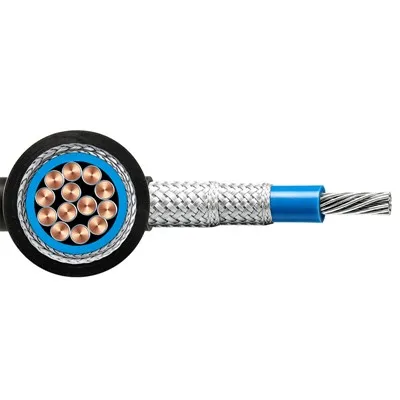
Now, if you’re planning a project, whether it’s residential, commercial, industrial, or something in between, and you need to figure out the right wire for your current needs, don’t guess. We can help you pick the right gauge, insulation, and material to keep your setup safe and working properly. Just reach out to us to chat about your project—we’re here to help, no confusing sales pitches, just straight-up advice.
Power Cable Low Voltage References
- National Electrical Code (NEC), Article 310, Conductors for General Wiring
- Copper Development Association, “Ampacity Tables for Copper Conductors”
- Underwriters Laboratories (UL), Standard for Safety for Electrical Wires and Cables (UL 62)
- Aluminum Association, “Electrical特性 of Aluminum Conductors”
Yangzhou Huayu Cable Co., Ltd.
Yangzhou Huayu Cable Co., Ltd. is one of the most professional electric wire manufacturers and suppliers in China, also supports customized service with low price. Please feel free to wholesale advanced electric wire made in China here from our factory. Contact us for pricelist.
Address: No. 9 Jingang Road, Yangzhou City, Jiangsu Province, China
E-mail: huayucableco@126.com
WebSite: https://www.huayucabletech.com/
