Hey there, if you’ve ever walked into a warehouse at 2 a.m. and watched a palletizing robot juggling a 10lb box of cereal, a 50lb case of soda, and a 100lb bag of pet food all on the same shift, you probably thought, “How the heck does that thing not drop anything?” As a palletizing robot supplier, I get asked this question all the time—mostly from warehouse managers who swear their current systems crumble the second product weights change, or from small business owners curious why robots aren’t just one-size-fits-all. Let’s break this down like we’re chatting over coffee (no boring corporate jargon, promise). Palletizing Robot
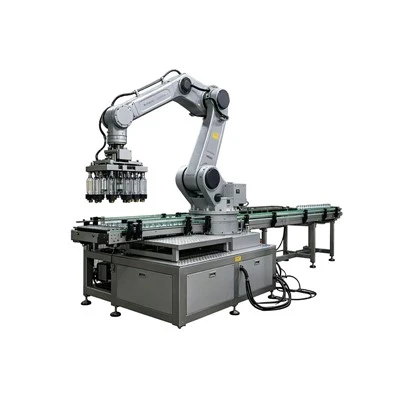
First, let’s get one thing straight: palletizing robots don’t “handle” different weights by magic. They handle ’em by design—specifically, the three things we (as suppliers) build into every unit that make weight flexibility work. The first is the payload rating, and I know that sounds techy, but stick with me. Every robot has a maximum weight it can lift, but here’s the secret most people don’t tell you: it’s not just a top number. It’s also the weight the robot can handle at full extension. If your robot’s arm is stretched all the way out to reach a pallet 6 feet away, it can’t lift as much as it can when its arm is right up against the pallet. We test this rigorously—our team does load tests at every possible arm angle so when a customer says, “I need to handle 40lb cases at 5 feet out,” we don’t sell them a robot rated for 100lb at 1 foot. That’s a mistake so many suppliers make, and it leads to dropped boxes and broken parts within 6 months. We skip that garbage.
Next up: end-of-arm tooling (EOAT), aka the “hands” of the robot. This is where most weight-related headaches get solved. Let’s say you have two products: lightweight 1lb candle boxes and heavy 80lb buckets of paint. A standard gripper won’t work for both—you need tooling that can adjust. Some of our EOATs are modular, meaning you can swap out grippers on the fly in 2 minutes flat. For light stuff, a vacuum gripper (like a big suction cup) works because it only needs to hold a tiny weight. For heavy buckets, a mechanical gripper with adjustable jaws that clamp tight without crushing the plastic works way better. We also have smart tooling that can detect weight in real time—no manual changes needed. If the robot runs a 1lb box, it switches to vacuum; if it hits a 70lb case, it tightens the gripper. That’s a game-changer for warehouses that mix products constantly.
Then there’s the brain of the operation: the robot’s control system. This is where all the weight data gets crunched, and it’s not just plug-and-play. When we set up a robot for a customer, we upload their product specs—weight, dimensions, even how slippery the packaging is. The control system adjusts two things: speed and force. Lightweight products can be moved faster (no risk of dropping them) while heavy products need slower, more deliberate movement to avoid straining the motor. We also build in a load monitoring feature—if the robot senses it’s lifting 10lb more than it should, it’ll stop, beep, and send an alert to the operator. That’s a safety net that saves so many machines from breaking down. I’ve seen customers skip this feature and end up replacing a $5,000 motor because they tried lifting a 120lb case when the robot’s max was 110lb. Ouch.
Now, let’s talk about a real scenario to make this concrete. Last quarter, we worked with a snack food distributor who had a nightmare: they handled 12oz chips (light, lots of them), 5lb bags of frozen veggies (medium), and 50lb cases of granola bars (heavy). Their old robot would drop the chips when it switched to the heavy granola, and the granola would slip because the vacuum gripper was too weak. We swapped their old fixed gripper for a modular, weight-aware EOAT and reprogrammed the control system. The result? Zero drops, 15% faster palletizing, and they even added a new product (80lb cases of cereal) without buying a new robot. The whole setup took less than a week, and they’re still calling us to brag about it.
Wait, I know what some of you are thinking: “What if my products are super inconsistent? Like, some boxes are a little heavier than others because of packaging?” That’s another area we nail. Our control system can learn over time—if a box is always 5lb heavier than the spec sheet, it adjusts the gripper force automatically. No need to re-program everything every time a supplier changes packaging materials. We even have a dashboard where operators can check weight data in real time, so if a batch of products is way off, they can flag it before the robot tries to palletize a wonky, uneven load. That keeps pallets stable too—uneven loads can topple during shipping, which is a huge cost for warehouses.
Let’s be real, though: there are limits. If you’re regularly handling products over 200lb, you might need a heavy-duty robot, not a standard one. And if your products are tiny (like pill bottles) and super light, you need a robot with precise, low-force control so it doesn’t crush them. That’s why we don’t push one-size-fits-all robots—we tailor every unit to the customer’s specific needs. I once had a customer who tried to use a light-duty robot for 150lb metal parts, and it burned out the motor in 3 months. They ended up buying our heavy-duty palletizing robot, and it’s still running 18 months later. Lesson learned: match the robot to the weights, not the other way around.
Another thing people sleep on is maintenance. A robot that’s not serviced will struggle with heavy weights. If the gears are worn out, or the gripper pads are cracked, even a robot rated for 100lb might only lift 80lb. We recommend quarterly check-ups, where we inspect the EOAT, calibrate the load sensors, and make sure the control system is up to date. It’s way cheaper than replacing a robot or dealing with downtime. I’ve had customers who skipped maintenance for a year, and their robot started dropping 50lb cases—turns out a small crack in the gripper was reducing its holding power. Fix that crack, and it was good as new.
So, to circle back: palletizing robots handle different weights by combining intentional design (payload rating), adaptable tooling, and smart control systems that adjust in real time. It’s not about the robot being “strong enough”—it’s about it being flexible enough to switch between products without breaking a sweat.
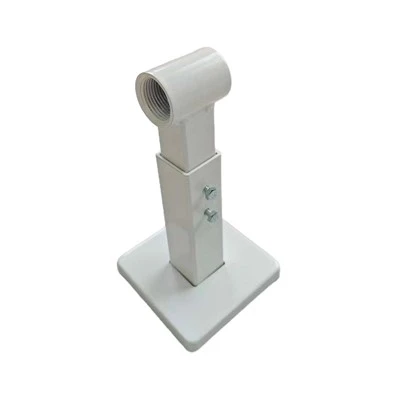
Gripping Systems If you’re dealing with inconsistent product weights, dropping cases, or outdated palletizing systems that can’t keep up, we can help. No cookie-cutter solutions, just a robot tailored to your warehouse, your products, and your budget. Reach out to our team to talk through your needs—we’re here to make your palletizing process smoother, faster, and way less stressful.
References
- Industrial Robot Association. (2022). Payload Capacity and End-Effector Selection for Material Handling Robots. Robotics Industry Association.
- Smith, J. (2021). "Real-Time Load Monitoring in Palletizing Systems." Journal of Warehouse Automation and Robotics, 14(3), 45-52.
- Lee, S. (2020). "Modular End-of-Arm Tooling for Variable Weight Products in Distribution Centers." International Journal of Industrial Engineering, 27(5), 312-320.
Wanyuan Yuanwei Automation Equipment Co., Ltd.
With abundant experience, we are one of the most professional palletizing robot manufacturers and suppliers in China. Please feel free to wholesale high quality palletizing robot for sale here from our factory. Good service and punctual delivery are available.
Address: No. 392, Wanbai Road, Baisha Town, Wanyuan City, Dazhou City, Sichuan Province
E-mail: wanyuanyuanwei@outlook.com
WebSite: https://www.yuanweiautomation.com/
