If you’ve ever worked in industries like liquefied natural gas (LNG), cryogenic storage, or even deep-space component testing, you know how unforgiving extreme low temperatures can be on equipment. A tiny material flaw or a wrong valve choice can spiral into costly shutdowns, safety hazards, or even catastrophic failures. As a supplier specializing in forging valves, I get asked this question all the time: Are forging valves actually suitable for low-temperature applications? The short answer is yes—but let’s break down why, how, and what you need to watch out for, because not all forging valves are created equal when it comes to sub-zero conditions. Forging Valve
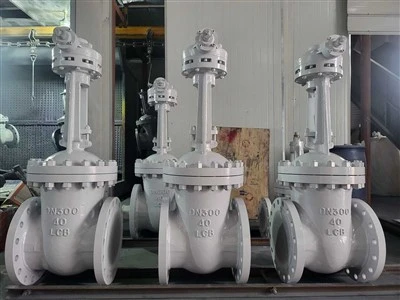
First, let’s start with the basics: what makes a valve work in low temperatures? The two biggest challenges here are material brittleness and structural integrity. When metals drop below their ductile-to-brittle transition temperature (DBTT), they shift from bending and absorbing energy to cracking suddenly under stress. That’s a huge problem for valves, which are under constant pressure, torque from actuators, and temperature fluctuations in their operating environment. Forging, the manufacturing process that shapes metal by hammering or pressing it into a die, plays a critical role here. Unlike casting, where molten metal cools and can develop voids, inclusions, or uneven grain structures, forging aligns the metal’s grain flow to match the part’s intended shape. That’s a game-changer for low temperatures.
Take a common material for cryogenic valves: 304L stainless steel. It’s low-carbon, which reduces the risk of intergranular corrosion, but its DBTT is far lower than standard 304 stainless—around -100°F (-73°C) compared to room temperature for regular 304. When we forge 304L, the forging process refines the grain structure, eliminates the tiny internal voids that can act as stress raisers, and increases the material’s impact strength at low temps. I’ve seen this firsthand with a customer in the LNG transport industry a few years back. They were using cast valves for their transfer lines, and after a few months, they had three separate instances of valve stem cracking at -162°C (-260°F), which is LNG’s storage temperature. They switched to our forged 304L valves, and in the four years since, they haven’t had a single low-temperature-related failure. That’s the kind of real-world proof you can’t get from a textbook.
But it’s not just the base material—forging design matters too. For low-temperature applications, forged valves are often made with thicker cross-sections in critical areas, like the body and bonnet, to handle thermal contraction and pressure spikes. We also use full penetration welds for bonnet to body connections, instead of the socket welds common in smaller valves, because socket welds create a crevice where moisture can trap, leading to corrosion that weakens the material at low temps. Another key point: forged valves are precision-machined after forging, which ensures a tight, consistent seal that’s essential in cryogenic systems. A leak in an LNG line isn’t just a waste of product—it’s a safety risk, and forged valves’ tight tolerance machining minimizes that risk.
Wait, but what about exceptions? No valve is perfect, and there are cases where forged valves might not be the best fit. For example, some very small, low-pressure applications where cost is the top priority. Forging is more labor-intensive and has higher tooling costs upfront, so a small cast valve might be sufficient if the operating temperature is only slightly below freezing, not deep cryogenic. But for temperatures below -40°C (-40°F), which is the threshold for many industrial low-temperature standards, forged valves are almost always the reliable choice. Also, not all forging processes are equal. Some suppliers cut corners with “semi-forging,” where metal is only partially shaped before machining, instead of full forging. That can leave residual stresses and uneven grain structures, which are bad news at low temps. That’s why I always advise customers to ask for material test reports that show impact strength at the specific low temperature they’re operating at—something we provide with every valve we ship.
Another factor to consider is thermal expansion. Most metals expand when heated and contract when cooled, but different materials contract at different rates. In low-temperature applications, this can cause sealing issues if the valve’s body and trim parts (like the stem, disc, and seat) are made from materials with mismatched coefficients of thermal expansion. For example, if a valve body is forged from carbon steel and the trim is from a different alloy, the trim might shrink more than the body at low temps, leading to gaps that cause leaks. At our facility, we work with customers to select matched material pairs for trim and body, like forged 316L stainless steel for trim when the body is 304L, or even specialized alloys like duplex stainless steel for extremely low temps down to -269°C (-452°F), which is the boiling point of liquid helium. We also conduct thermal cycling tests on all our low-temperature valves, where we heat and cool the valve repeatedly between ambient and operating temps, to ensure the seal holds up through thousands of cycles.
I’ve also had customers ask me about forged valves vs. other types, like forged vs. machined bar stock valves. Machined bar stock is similar in some ways, but it’s made from a solid billet, so the grain flow is random, whereas forging aligns the grain to follow the part’s contours. That aligned grain makes forged valves 20-30% stronger in tension and impact at low temps, according to data from the American Society of Mechanical Engineers (ASME), which sets the standards for industrial valves. That strength difference is exactly why a machined bar stock valve might fail in a cryogenic test, while a forged one passes.
Now, let’s talk about a common myth: that forged valves are too heavy for some low-temperature applications. Sure, a forged steel valve will be heavier than a plastic one, but plastic valves can’t handle the pressure and temperature of most industrial low-temperature systems. For example, LNG pipelines operate at pressures up to 1500 PSI, and plastic would become brittle and crack at those pressures below -40°C. Forged valves, on the other hand, are designed to handle those pressures, and advancements in forging technology have reduced their weight over the years. We use precision forging and lightweight alloys where possible, so customers don’t have to deal with unnecessary bulk.
So, how do you make sure you’re choosing the right forged valve for your low-temperature application? First, define your exact operating parameters: what’s the minimum temperature, the maximum pressure, the type of fluid (LNG, liquid nitrogen, etc.), and any safety standards you have to meet (like ASME B31.3 for process piping). Then, work with a supplier who has experience in low-temperature valves—someone who can provide material test reports, has a track record of successful installations in similar applications, and will help you select the right material and design. Avoid suppliers who only offer standard forged valves and can’t explain how their product performs at sub-zero temps.
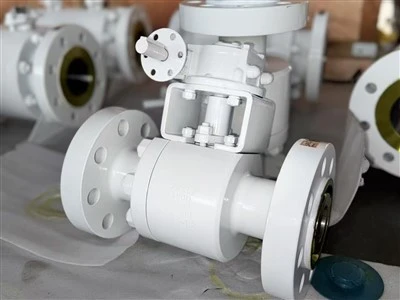
At the end of the day, low-temperature applications demand reliability. A valve failure in a cryogenic system isn’t just a downtime issue—it’s a safety issue, and that’s why I’m passionate about forging valves. The combination of refined grain structure, structural integrity, and precise machining makes forged valves one of the safest and most reliable choices for environments where cold can break lesser materials. If you’re working on a low-temperature project, whether it’s LNG, cryogenic storage, or another industrial application, I’d be happy to walk you through our product line, answer your questions, and help you find the right valve for your needs. You can connect with us directly to discuss your requirements and get a custom solution tailored to your application.
Check Valve References
- ASME B16.34: Standard for Valves—Flanged, Threaded, and Welding End
- “Effect of Forging Process on Low-Temperature Impact Strength of Austenitic Stainless Steels,” Journal of Materials Engineering and Performance, 2018
- Cryogenic Valves: Selection, Design, and Application Guidelines, Cryogenic Society of America, 2021
- “Ductile-Brittle Transition Behavior of Forged vs. Cast Carbon Steel for Low-Temperature Service,” International Journal of Pressure Vessels and Piping, 2020
Zhejiang Poro Valve Manufacturing Co., Ltd.
With abundant experience, we are one of the most professional forging valve manufacturers and suppliers in China. We warmly welcome you to buy customized forging valve made in China here from our factory. If you have any enquiry about cooperation, please feel free to email us.
Address: PORO Ind. Park, Oubei Dongou Ind. Zone, Wenzhou, Zhejiang, China
E-mail: poro@cnporo.com
WebSite: https://www.cn-poro.com/
