Hey there! As a supplier of T2 40KA Surge Protective Devices (SPDs), I’ve been getting a lot of questions lately about the communication interfaces available for remote monitoring. So, I thought I’d take a moment to break it all down for you. T2 40KA Surge Protective Device
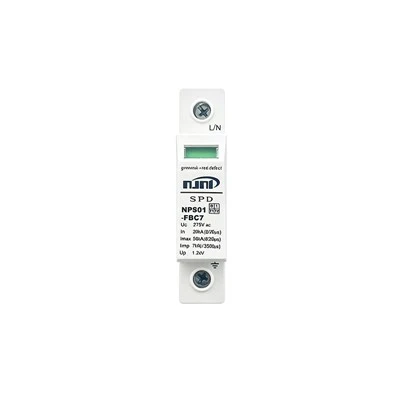
Let’s start with the basics. Why is remote monitoring so important for surge protective devices? Well, it allows you to keep an eye on the status of your SPDs without having to physically be there. This is super handy, especially for large installations or places that are hard to reach. You can quickly detect any issues, like a fault or a wear – out situation, and take action before it causes serious problems.
Now, let’s dive into the different communication interfaces you can find on a T2 40KA Surge Protective Device.
Modbus RTU
The first one on the list is Modbus RTU. It’s like a classic in the industrial communication world. It’s a serial communication protocol that’s widely used for connecting electronic devices. With Modbus RTU on your T2 40KA SPD, you can easily integrate it into your existing monitoring system.
Here’s how it works. The SPD acts as a slave device. Your monitoring system, which is the master, can send requests to the SPD. These requests can be asking for things like the current status of the SPD, the number of surges it has handled, or the remaining life of the protection elements. The SPD then responds with the relevant data.
What I really like about Modbus RTU is its simplicity. It’s easy to set up and most industrial monitoring software supports it. So, if you’re already using a Modbus – based system, adding our T2 40KA SPD to the mix is a breeze.
Ethernet TCP/IP
In today’s digital age, Ethernet TCP/IP is a must – have. It offers high – speed data transfer and is very reliable. Our T2 40KA SPDs with Ethernet TCP/IP interfaces can be connected directly to your local area network (LAN) or even the internet, if you choose to do so.
With an Ethernet interface, you can access the SPD’s data from anywhere in the world, as long as you have a secure network connection. You can use a web – based interface to view real – time data, such as surge activity graphs, temperature readings, and fault alerts. This is great for large organizations with multiple sites. You can have a central monitoring station that keeps tabs on all the SPDs spread across different locations.
Another advantage of Ethernet TCP/IP is its scalability. You can easily add more SPDs to your network as your business grows. And since most modern monitoring devices support Ethernet, integrating our SPD with other equipment in your facility is seamless.
Bluetooth
Bluetooth is a short – range wireless communication technology that’s also available on some of our T2 40KA SPDs. It’s perfect for situations where you need to quickly access the data of the SPD without having to connect it to a wired network.
For example, if you’re a maintenance technician on – site, you can use your smartphone or tablet with a Bluetooth – enabled app to connect to the SPD. You can then view important information like the device’s history, check the status of the protection modules, and even perform some basic configuration tasks.
Bluetooth is really convenient because it’s easy to use. You don’t need to be an IT expert to pair your device with the SPD. Just turn on Bluetooth on your mobile device, search for the SPD, and enter the pairing code if required. It’s a great option for quick inspections and troubleshooting.
LoRaWAN
LoRaWAN is a low – power, wide – area network (LPWAN) protocol. It’s designed for long – range communication with low data rates. This makes it ideal for large – scale deployments of T2 40KA SPDs, especially in remote areas.
With LoRaWAN, you can connect multiple SPDs over a large geographical area to a central server. The low – power consumption of LoRaWAN means that the SPDs can operate for a long time on battery power, reducing the need for frequent maintenance to replace batteries or recharge them.
The long – range capability is also a big plus. You can have SPDs installed in areas that are far apart, and still be able to monitor them efficiently. This is very useful for applications like power distribution networks in rural areas or large industrial complexes.
Comparing the Interfaces
Each of these communication interfaces has its own pros and cons. Modbus RTU is simple and widely supported, but it has limitations in terms of distance and data – transfer speed. Ethernet TCP/IP offers high – speed data transfer and global access, but it requires a more complex network infrastructure. Bluetooth is convenient for on – site access, but has a limited range. LoRaWAN is great for long – range and low – power applications, but the data – transfer rate is relatively low.
When choosing the right communication interface for your T2 40KA SPD, you need to consider your specific requirements. If you have a small – scale installation and already use a Modbus – based system, Modbus RTU might be the best choice. For large – scale, geographically – dispersed installations, Ethernet TCP/IP or LoRaWAN could be more suitable. And if you need quick on – site access, Bluetooth is the way to go.
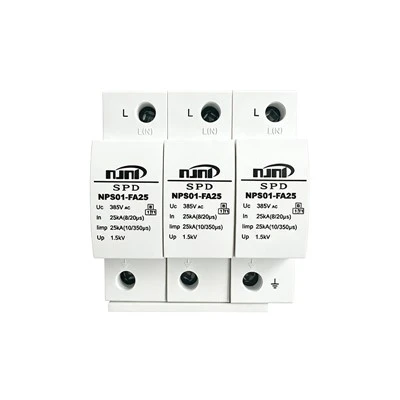
We understand that every customer has unique needs, and that’s why we offer a variety of communication interfaces on our T2 40KA Surge Protective Devices. Whether you’re a small business owner looking to protect your electrical equipment or a large utility company managing a vast power grid, we’ve got you covered.
Surge Protection Device If you’re interested in our T2 40KA Surge Protective Devices or want to know more about the communication interfaces, feel free to reach out. We’d love to have a chat and help you find the perfect solution for your situation. You can start a conversation with us in our official communication channels to discuss your specific requirements and start the procurement process. We’ll be happy to assist you.
References
- “Modbus Protocol Specification” by the Modbus Organization.
- “TCP/IP Illustrated” by Richard A. Deal.
- “Bluetooth Core Specification” by the Bluetooth Special Interest Group.
- “LoRaWAN Specification” by the LoRa Alliance.
Nanjing Ningpu Lightning Protection Equipment Manufacturing Co., Ltd.
As one of the most professional T2 40ka surge protective device manufacturers and suppliers in China, we’re featured by quality products and good price. Please rest assured to buy customized T2 40ka surge protective device made in China here from our factory. Also, pricelist is available.
Address: Building 1, No.20 Shengyuan Road, Lishui Economic Development Zone, Nanjing City, Jiangsu Province, China
E-mail: 3796023563@qq.com
WebSite: https://www.npspd.com/
