As a seasoned supplier of plastic optical brighteners, I’ve witnessed firsthand the transformative power these remarkable compounds have on plastic products. Optical brighteners are additives that enhance the appearance of plastics by absorbing ultraviolet light and re – emitting it as visible blue light, effectively offsetting the yellowing or dullness often associated with plastic. But the question that often arises in the industry is: how can we accurately test the effectiveness of plastic optical brighteners? Plastic Optical Brightener
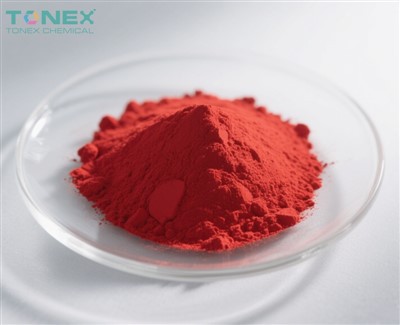
1. Understanding the Basics of Plastic Optical Brighteners
Before delving into the testing methods, it’s crucial to understand the fundamental properties of plastic optical brighteners. These brighteners generally fall into two categories: stilbene – based and coumarin – based. Stilbene – based brighteners are widely used in various plastics due to their high brightness and good heat stability. They work by absorbing UV light in the range of 340 – 380 nm and emitting blue – violet light at around 430 – 450 nm. Coumarin – based brighteners, on the other hand, are often used in applications where a more bluish – white appearance is desired, and they have a different absorption and emission spectrum.
2. Visual Inspection
The simplest and most intuitive way to test the effectiveness of a plastic optical brightener is through visual inspection. This method is based on comparing the appearance of plastic samples with and without the brightener under specific lighting conditions.
Preparation of Samples
First, prepare two sets of plastic samples. One set should contain the plastic resin only, while the other set should have the same plastic resin with the optical brightener added at a pre – determined concentration. The samples should be of the same size, shape, and thickness to ensure a fair comparison.
Lighting Conditions
Visual inspection should be carried out under a standard light source, such as a D65 daylight simulator. This type of light source mimics natural daylight, which is the most common lighting environment for plastic products. Place the samples side by side under the light source and observe the color and brightness.
Evaluation Criteria
A well – functioning optical brightener should make the plastic sample appear brighter and whiter compared to the sample without the brightener. The difference should be clearly visible to the naked eye. However, visual inspection is subjective and can be affected by factors such as the observer’s eyesight and the surrounding environment. Therefore, it should be used in conjunction with other more objective testing methods.
3. Spectrophotometric Analysis
Spectrophotometric analysis is a more accurate and objective method for testing the effectiveness of plastic optical brighteners. This method measures the absorption and emission spectra of the plastic samples, providing detailed information about the optical properties of the brightener.
Principle of Spectrophotometry
A spectrophotometer works by shining a beam of light through a sample and measuring the amount of light absorbed and transmitted at different wavelengths. For plastic optical brighteners, we are particularly interested in the UV – visible region of the spectrum. The absorption spectrum shows the wavelengths at which the brightener absorbs light, while the emission spectrum shows the wavelengths at which it emits light.
Sample Preparation
Prepare the plastic samples in the same way as for visual inspection. The samples should be in a form that can be easily inserted into the spectrophotometer, such as thin films or small pellets.
Measurement and Analysis
Place the sample in the spectrophotometer and measure the absorption and emission spectra. Compare the spectra of the sample with the optical brightener to the spectrum of the sample without the brightener. A effective brightener should have a clear absorption peak in the UV region and a strong emission peak in the visible blue – violet region. The intensity of the emission peak can be used as an indicator of the brightener’s effectiveness. A higher emission intensity generally means a more effective brightener.
4. Fluorescence Microscopy
Fluorescence microscopy is another powerful technique for testing the effectiveness of plastic optical brighteners. This method allows us to visualize the distribution of the brightener within the plastic matrix and to observe its fluorescence properties at a microscopic level.
Principle of Fluorescence Microscopy
Fluorescence microscopy uses a special light source to excite the fluorescent molecules in the sample. The excited molecules then emit light at a longer wavelength, which can be detected and visualized using a microscope.
Sample Preparation
Prepare thin sections of the plastic samples containing the optical brightener. The sections should be thin enough to allow light to pass through and to clearly observe the fluorescence.
Observation and Analysis
Place the sample on the microscope stage and use the appropriate filters to excite the brightener and detect its fluorescence. Observe the sample under the microscope and note the distribution of the brightener within the plastic matrix. A well – dispersed brightener should show a uniform fluorescence throughout the sample. In addition, the intensity of the fluorescence can be used to evaluate the effectiveness of the brightener. A stronger fluorescence indicates a more effective brightener.
5. Long – Term Stability Testing
In addition to immediate effectiveness, the long – term stability of plastic optical brighteners is also an important factor to consider. Plastic products are often exposed to various environmental conditions, such as heat, light, and moisture, which can affect the performance of the brightener over time.
Heat Stability Testing
To test the heat stability of the brightener, prepare plastic samples containing the brightener and subject them to high – temperature conditions. For example, the samples can be placed in an oven at a specific temperature (e.g., 150°C) for a certain period of time (e.g., 24 hours). After the heat treatment, test the samples using visual inspection or spectrophotometric analysis. A heat – stable brightener should maintain its brightness and optical properties after the heat treatment.
Light Stability Testing
Light stability testing simulates the effect of sunlight on the plastic samples. Place the samples in a light – aging chamber, where they are exposed to a high – intensity light source (e.g., a xenon arc lamp) for a specified period of time. After the light exposure, evaluate the samples using the same methods as before. A light – stable brightener should resist fading and keep its brightening effect over time.
6. Quality Control in Production
As a plastic optical brightener supplier, ensuring the quality and effectiveness of our products is of utmost importance. We implement a strict quality control system throughout the production process.
Raw Material Inspection
We carefully inspect the raw materials used in the production of optical brighteners. Only high – quality raw materials that meet our strict specifications are used. This helps to ensure the consistency and quality of the final product.
Production Process Monitoring
During the production process, we closely monitor various parameters, such as temperature, pressure, and reaction time. These parameters can have a significant impact on the quality and effectiveness of the brightener. By maintaining strict control over these parameters, we can produce brighteners with consistent performance.
Final Product Testing

Before the products are shipped to customers, we conduct a series of final product tests using the methods described above. This includes visual inspection, spectrophotometric analysis, and long – term stability testing. Only products that meet our high – quality standards are released to the market.
Conclusion
Desiccant Masterbatches Testing the effectiveness of plastic optical brighteners is a multi – faceted process that requires a combination of different methods. From simple visual inspection to advanced spectrophotometric analysis and microscopy, each method provides valuable information about the performance of the brightener. At our company, we are committed to providing high – quality plastic optical brighteners that meet the diverse needs of our customers. If you are interested in purchasing our plastic optical brighteners or have any questions about their effectiveness and applications, please feel free to reach out to us for further discussion. We look forward to collaborating with you to enhance the appearance and performance of your plastic products.
References
- Zollinger, H. Color Chemistry: Synthesis, Properties and Applications of Organic Dyes and Pigments. Wiley – VCH, 2003.
- Christie, R. M. Colour Physics for Industry. Society of Dyers and Colourists, 2001.
- Johnston, R. A. Optical Brightening Agents. Wiley – Interscience, 1972.
Jinan Tonex Chemical Co., Ltd.
We’re well-known as one of the leading plastic optical brightener manufacturers and suppliers in China. With abundant experience, we warmly welcome you to buy bulk high quality plastic optical brightener for sale here from our factory. For price consultation, contact us.
Address: No.3699 Huayuan East Road, Jinan, Shandong, China
E-mail: yama@tonexchem.com
WebSite: https://www.tonexoba.com/
