As a supplier specializing in steel-plastic joints for marine applications, I spend most of my field days at shipyards and on board cargo vessels, talking to engineers, superintendents, and deck officers who all have one shared frustration: marine pipeline systems are stuck between two bad choices. On one hand, traditional all-steel pipes are strong enough to handle saltwater, fuel oil, and high-pressure steam, but they corrode, leak, and require constant maintenance. On the other, full-plastic pipes are lightweight and corrosion-resistant, but they can’t withstand the torque of heavy machinery or the rough handling of a ship’s daily operations. For years, the answer felt binary—until steel-plastic joints entered the conversation. Steel-plastic Joint
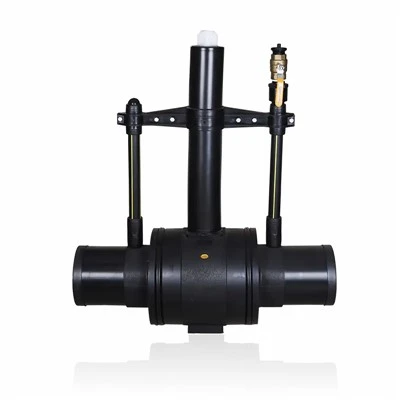
I get asked the same question at least once a week, face to face or over email: Can a steel-plastic joint actually work in a ship’s pipeline? The short answer is yes, but the long answer requires cutting through the hype and breaking down what makes marine environments unforgiving, how our joints are designed to meet those demands, and why so many ship operators now rely on them to cut costs, reduce downtime, and improve safety. Let’s start with the basics: what a steel-plastic joint is, and why it fills a gap no other product does. A steel-plastic joint is a transition fitting that connects steel piping (the backbone of most ship hydraulic, firefighting, and ballast systems) to plastic piping (used for lighter utilities like domestic water or ventilation lines). It’s not just a quick weld or a glue-on adapter—our joints are engineered to merge two materials with wildly different thermal expansion rates, pressure tolerances, and corrosion resistance, without creating a weak point that can fail at sea.
First, let’s address the biggest myth about marine steel-plastic components: that they’re too weak for the rough conditions of a ship. A typical merchant ship sits in saltwater 90% of the time, its pipelines exposed to humidity that climbs to 95% in engine rooms, pressure spikes from pumping fuel or water, and vibration from main engines that can reach 100 Hz or more. Our steel-plastic joints are built to pass international marine standards—we test every unit to 1.5 times the maximum working pressure required for Class B and Class C ship pipelines, and we conduct 1,000-hour salt spray tests that exceed ISO 9227 specifications. That means they don’t rust through in the engine room’s humid air, and they don’t crack when a 50-ton engine vibrates at them for months on end. I’ve seen a set of our joints on a bulk carrier’s ballast line last three years without a single leak, when nearby all-steel fittings had to be replaced twice in the same period.
Another common concern is thermal expansion. Steel expands at about 12 parts per million per degree Celsius, while common marine plastics like HDPE or PVDF expand at 10 times that rate. That mismatch can cause standard transition fittings to split or leak within a year of installation. Our joints solve this with a two-part design: a high-grade carbon steel end that’s fused to a medium-density polyethylene (MDPE) end using a heat fusion process that eliminates any gaps between the two materials. We also add a flexible elastomeric seal ring at the transition point that absorbs movement—so when a ship’s engine room temperature swings 20 degrees between daytime operations and nighttime idle, the joint flexes with the change, instead of fighting it. I remember a superintendent from a container ship telling me that before switching to our joints, their PVC transition fittings would leak every time the ship crossed the Equator, when temperatures spiked. Now, he said, “We haven’t touched that line in 18 months.”
Cost is another big factor for ship operators, who know that every day a ship is in dry dock costs thousands of dollars in lost revenue. Traditional all-plastic pipelines for marine use require heavy reinforcement brackets every three feet to handle vibration, and they often can’t be used for high-pressure lines like fire mains, which have to meet SOLAS (Safety of Life at Sea) standards. All-steel pipelines, on the other hand, require regular internal and external coating, yearly pressure tests, and frequent patching of corrosion. A 100-foot section of 4-inch steel pipe for a fire main can cost $1,200 in materials and $800 in installation and maintenance over five years. A steel-plastic joint-based system for the same line? Materials cost $900, and maintenance costs are cut by 70% because the plastic section never rusts, and the steel-plastic transition doesn’t corrode either. I’ve calculated that for a mid-sized cargo ship with 100 linear feet of mixed steel-plastic piping, the return on investment is usually within 14 months—something no other transition solution can match.
But let’s be honest: steel-plastic joints aren’t right for every marine pipeline. You wouldn’t use them for a high-pressure steam line that runs to a ship’s main engine, where temperatures can hit 250 degrees Celsius, because even our joints have a maximum temperature rating of 80 degrees. They also aren’t recommended for lines carrying highly corrosive chemicals like sulfuric acid, which would eat through the plastic end. For those applications, full steel piping with a specialized coating is still the best choice. But for 60% of the mixed piping systems on most merchant ships—ballast lines, domestic water lines, ventilation ducts, and low-pressure hydraulic lines—they’re ideal.
I’ve also seen steel-plastic joints work in niche marine applications that most people don’t think about. Take fishing trawlers, which operate in some of the harshest saltwater environments, where pipelines are constantly bent and twisted by the motion of the sea. A trawler I work with had a line to their ice storage unit that kept leaking because all-steel fittings corroded and plastic fittings cracked from the rough handling of dragging nets. We installed our steel-plastic joints, and two years later, the captain told me they’d had zero leaks in that line—something he said “never happens on a trawler.” Another example is research vessels, which carry sensitive equipment that can be damaged by leaks or corrosion. A team of oceanographers using a research ship to study coral reefs switched to our joints for their water sampling lines, and reported that their sample results were more consistent because the lines didn’t corrode and leach metal particles into the water.
Of course, there are real-world challenges to using steel-plastic joints that engineers need to plan for. The biggest one is installation: unlike standard steel or plastic fittings, our joints require a specialized heat fusion tool to connect the plastic end to the existing plastic pipe. If installed correctly, the joint is as strong as the rest of the plastic line, but if installed improperly, it can fail. That’s why we work with every shipyard and operator to provide on-site training for their installation teams, so they know how to prepare the pipe, set the correct heat and pressure for fusion, and test the joint before it’s put into service. We also provide 24/7 technical support, so if a team runs into a problem at 2 a.m. during a dry dock repair, they can call us and get step-by-step guidance.
Another challenge is certification. Marine pipelines require certification from classification societies like ABS (American Bureau of Shipping), DNV (Det Norske Veritas), and LR (Lloyd’s Register). Our joints are fully certified by all three, and we can provide documentation that meets SOLAS and MARPOL (International Convention for the Prevention of Pollution from Ships) standards. That means they’re accepted in every major port around the world, so a ship can’t be denied entry because of an uncertified fitting. I’ve had operators tell me that certification was the biggest hurdle before choosing our joints, because many other steel-plastic transition products on the market don’t have the necessary marine certifications. We invested two years in testing and certification to make sure our joints are legal and safe for use in any marine pipeline.
Let’s circle back to the original question: Can a steel-plastic joint be used in a ship pipeline? The answer, from 15 years of working on ships with hundreds of operators, is not just yes—it’s one of the most reliable, cost-effective solutions for mixed marine pipelines today. The days of choosing between a corrosion-prone steel fitting and a weak, uncertified plastic fitting are over. Our steel-plastic joints bridge that gap, combining the strength and durability of steel with the corrosion resistance and lightweight design of plastic, all while meeting the strict standards of the marine industry.

If you’re a ship superintendent, engineer, or shipyard manager dealing with frequent pipeline leaks, high maintenance costs, or downtime during dry docks, I know you’re looking for a solution that works. I’ve spent my career listening to the problems ship operators face, and our steel-plastic joints are built to solve those problems, not just sell a product. We don’t do one-size-fits-all—we work with you to assess your specific pipeline system, recommend the right joint size and design, and provide the training and support to make sure it’s installed correctly.
Electrofusion Fittings References
- ISO 9227: Corrosion tests in artificial atmosphere – Salt spray tests, International Organization for Standardization, 2017
- SOLAS Chapter II-1: Construction – Structure, Subdivision and Stability, International Maritime Organization, 2022
- DNVGL-OS-F101: Submarine Pipeline Systems, Det Norske Veritas, 2020
- Marine Pipeline Corrosion Control Guide, American Bureau of Shipping, 2021
- Thermal Expansion Coefficients for Common Engineering Materials, ASM International, 2019
Yuyao Aoshi Hydraulic Components Manufacturing Co., Ltd.
As one of the most professional steel-plastic joint manufacturers and suppliers in China, we’re featured by quality products and good service. Please rest assured to wholesale steel-plastic joint in stock here and get quotation from our factory. Customized orders are welcome.
Address: Huilong village, Zhangting town, Yuyao city, Zhejiang province, China.
E-mail: renxuwei@vip.163.com
WebSite: https://www.jintongtrading.com/
