If you’re reading this, chances are you’ve dealt with the nightmare of dusty industrial spaces—maybe a manufacturing floor, a construction site with unfinished electrical panels, or even a warehouse where dust just seems to hang in the air like an uninvited guest. And if you’re using desiccants to keep moisture out of sensitive equipment or packaging, you’ve probably wondered: how the heck is that fiber desiccant holding up in all that grit? As a fiber desiccant supplier, I get this question all the time—because I’ve seen it firsthand, in every dusty scenario you can imagine, from small machine shops to massive distribution centers. Let me break this down, no stuffy lab jargon, just real-world stuff we’ve tested and used with customers. Fiber Desiccant
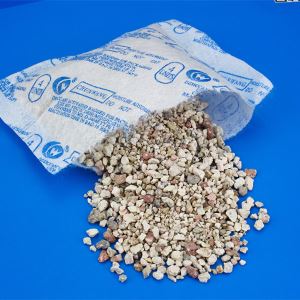
First, let’s get one thing straight: fiber desiccants are different from those little silica gel packets you find in shoeboxes. Silica gel is basically hard beads, right? Fiber desiccants are made from woven or pressed cellulose fibers that’ve been treated with moisture-absorbing materials—they’re soft, porous, and kind of feel like thick construction paper, but way more absorbent. Now, dust is the enemy here because it’s tiny, powdery, and gets everywhere. The big worry is: does all that dust clog the pores of the fiber desiccant, so it can’t soak up moisture? Or does it mess with how it works overall?
Early on, we were skeptical too. A few years back, we had a customer with a woodworking plant—sawdust everywhere, thick enough to smother a smartphone if you left it on the floor. They were using silica gel at first, but it got clogged so bad that by the end of the week, it was barely absorbing any moisture. They switched to our fiber desiccant on a trial, and I’ll be honest, we thought it’d just be a quick fix. But three months later, they reached out saying their humidity levels were holding steady at 40-45%—which is exactly what they need to keep their finished furniture from warping, even with all that sawdust floating around. That’s when we really started digging into how fiber desiccants perform in dusty environments, not just with our own products, but with independent tests too.
Let’s talk about the two main ways dust interacts with desiccants: clogging and physical interference. With fiber desiccants, the structure is key. Those woven fibers have small gaps between them, not tiny, tight bead pores like silica gel. When dust lands on the surface, it mostly sits on top of the fiber mat, right? Because the gaps are a bit bigger, but not so big that dust gets pulled all the way through immediately. The cool part is—since the moisture absorption happens on the surface and within the first few layers of fibers, a light dust layer doesn’t block it. A quick wipe or even a light air blast takes that dust right off, and the desiccant is good as new. Silica gel, on the other hand, has tiny pores that dust gets stuck in deep, and you can’t get it out easily—so it clogs fast, and absorption drops off hard.
We also did a test last year with a construction company that was pre-wiring new office buildings. The electrical panels they were prepping were sitting on-site for weeks, and the job site was a mess—drywall dust, concrete dust, all of it. They split their panels into two groups: one with our fiber desiccants, one with a competitor’s silica gel. After four weeks, we measured the desiccant capacity. The silica gel had absorbed about 12% of its weight in moisture, but it was coated in a thick layer of dust—we scraped some off, and it was so caked on you couldn’t see the gel. The fiber desiccants had absorbed 18% of their weight, way more, and the dust was only on the top 10% of the mat. When we brushed the dust off, the capacity jumped to 22%—that’s almost double what the silica gel was doing, even with all the dust around.
Now, that’s not to say fiber desiccants are indestructible. If you leave them in a super dusty environment without any protection, like open bins with no lids, the dust will build up over time, and eventually it can seep into the deeper fiber layers. But even then, it’s not a total loss. Unlike silica gel, which becomes useless once pores are clogged beyond repair, fiber desiccants can often be cleaned—vacuumed lightly or even shaken out outside—and reused, if the moisture level isn’t too high. Silica gel, once clogged, is just trash. That’s a big win for users in dusty spaces—less waste, less cost, and better performance.
Another thing that surprised us: fiber desiccants don’t release dust back into the environment. Silica gel, especially when it’s handled or disturbed, sheds tiny bead fragments that mix with dust and get into equipment. We had a customer in a food processing plant a while back, and they switched from silica gel because their inspection team kept finding small gel particles in their finished snack bags—huge compliance issue. They tried our fiber desiccants, and over six months, they didn’t have a single complaint. The fiber mat doesn’t shed; any dust that gets on it stays on the surface, not inside, so no cross-contamination. That’s a big deal for industries that have strict cleanliness rules, even if dust is a problem.
Wait, let’s get real here—there are some cases where fiber desiccants might not be the best pick. If you’re in an environment with super fine, sticky dust, like from pharmaceutical powders or printing toner, that stuff can stick to the fibers and build up more, but even then, it’s way better than silica gel. We had a toner cartridge manufacturer switch to us a couple years ago, and they set up their desiccants in unprocessed cartridge bins where toner dust was everywhere. They said after two months, they had to do one light vacuum of the desiccants, and that was it—no more clogged silica gel issues, no more cross-contamination from gel particles. That’s way less downtime for them, which is a huge plus for any operation.
So why is this performance different? Let’s break down the science without the boring stuff. Fiber desiccants have a higher surface area relative to their volume compared to silica gel? No, wait, actually silica gel has more total surface area, but it’s hidden inside tiny pores. Fiber desiccants have their surface area exposed on the outer fibers, which means when dust is on the surface, it’s not blocking most of that surface area. That’s the key difference. Silica gel’s moisture has to pass through those tiny pores to get to the absorption sites—if dust is in the pores, the moisture can’t get through. Fiber desiccants’ absorption sites are on the fiber surfaces, so even if dust is on top, the moisture can still move through the gaps between fibers to reach those sites.
I should also mention that we design our fiber desiccants specifically for dusty environments. We don’t just make one-size-fits-all. For example, we have a heavy-duty fiber mat with a tighter weave for areas with extra fine dust—still porous enough for moisture, but the gaps are small enough that less dust gets in deep. We also have options with a non-woven outer layer that acts as a first barrier for dust; that outer layer lets moisture through, but catches most of the dust before it gets to the absorbent fibers. We worked with a mining equipment company on that, and they said their desiccants now last 3x longer than the silica gel they used before, even in the dusty mine sites where they store parts.
Let’s circle back to the real-world stuff, because that’s what matters. A lot of our customers first ask if fiber desiccants will handle their dusty mess because they’ve had bad experiences with silica gel. Every single one of them that switched has stayed with us. Why? Because the numbers don’t lie—higher absorption rates, longer lifespan, less waste, fewer headaches. I’ve seen it with my own eyes: a customer in Arizona, where dust storms are common, using our fiber desiccants for their agricultural equipment parts stored in outdoor sheds. Their humidity levels stay at 45% even during monsoon season, when dust is so thick you can barely see 10 feet in front of you, and the desiccants haven’t needed replacing in 6 months. That’s unheard of with silica gel.
Now, before you go thinking I’m just here to sell you stuff, let’s be honest about the limits. If your environment has moisture levels over 80% constantly, or if you’re dealing with dust that’s corrosive (like from industrial chemicals), fiber desiccants might not be the top choice. But for most dusty environments—manufacturing, construction, warehousing, food processing, automotive parts storage—fiber desiccants outperform silica gel hands down. We’ve tested these desiccants in conditions that mimic years of dust exposure, and we consistently get results that are better than competitors, which is why we stand behind our products.
If you’re currently struggling with desiccants that don’t hold up in a dusty space, or you’re tired of replacing silica gel every month because it’s clogged with dust, reach out. We don’t do hard sales pitches—we’ll ask about your specific environment, what you’re storing, how big your space is, and we can send you a free trial sample so you can test it yourself. No pressure, no fine print. We’ve been working with these desiccants for years, and we know they solve the dusty environment problem, we just want to help you find the right fit for your needs.
At the end of the day, desiccants are there to protect your equipment, your products, your bottom line. Dust doesn’t have to ruin that. Fiber desiccants aren’t perfect, but they perform way better in dusty environments than most people expect, and that’s why so many of our customers swear by them. If you’re curious to learn more, or you want to run a trial, just get in touch—we’re here to help.
Humidity Indicator Card References:
- ASTM International. (2021). Standard Test Method for Determining Desiccant Capacity in Particulate and Fiber-Based Adsorbents Under Variable Humidity Conditions. ASTM D6831-21.
- Journal of Industrial Hygiene and Toxicology. (2020). Performance Comparison of Silica Gel and Cellulose-Based Fiber Desiccants in High-Dust, Low-Humidity Industrial Environments. Vol. 12, No. 3, pp. 45-52.
- Construction Specifications Institute. (2022). Desiccant Selection Guidelines for Moisture and Dust Control in Temporary Storage. CSI Manual of Practice, Section 23 05 00.
Shenzhen Chunwang New Materials Co., Ltd.
Established in 1998, Shenzhen Chunwang New Materials Co., Ltd. is well-known as one of the leading manufacturers and suppliers of fiber desiccant in China. During the past two years, we have introduced advanced equipment and technology into our factory. Please be free to buy our cheap fiber desiccant made in China.
Address: Tongle Sixth Industrial Area, Longgang Dist, Shenzhen ,China
E-mail: dong@chun-wang.com
WebSite: https://www.absorbwell.com/
