Hey everyone, let’s cut to the chase—if you’ve ever dabbled in hydroponics, aquariums, or even tried to grow a thriving houseplant, you’ve probably heard of EC meters. If you’re new here, EC stands for Electrical Conductivity, right? It’s basically a measure of how many dissolved salts, minerals, and nutrients are floating around in your water or growing medium. Too little, and your plants starve; too much, and you’ll burn their roots faster than forgetting to water a succulent for a month. EC Meter
Now, one question I get 10 times a week from folks just starting out—whether they’re home growers, small-scale farmers, or even aquarist bros who swear by their coral tanks—is: “Are there digital EC meters? Like, not the clunky analog ones with the needle that’s always drifting off?”
Short answer: Yes, 100%—and they’re way more than just a fancy upgrade. Let’s break this down, because I’ve been selling EC meters for years, and I’ve seen first-hand how the right digital model can make or break a growing setup.
First, let’s recap what an analog EC meter is, for anyone who’s never used one. Those old-school ones have a glass probe, a dial, and you have to calibrate them with a solution before every use, then squint at the needle to read the number. They’re cheap, sure, but they’re finicky—if you even slightly bump the probe mid-test, the reading jumps. They also suck at keeping consistent numbers in anything that’s not super still water. I used to sell these back when I first got into this business, and I can’t tell you how many customers came back saying, “My analog meter said 1.8, but when I tested with my buddy’s digital, it was 2.2—did I do something wrong?” Spoiler: No, they were just fighting the needle.
Digital EC meters solve almost all of that. Here’s why they’re not just a gimmick—they’re a tool. For starters, they measure conductivity digitally, so the display shows you a exact number (usually in mS/cm or ppm, depending on the unit) instead of a needle’s “rough estimate.” No more squinting, no more guessing if the needle’s at 1.5 or 1.6. That alone is a game-changer for new growers who are still learning their crop’s sweet spot (like, tomatoes love around 2.0, lettuce is closer to 1.2, for context).
But wait—are all digital EC meters created equal? Nah, and that’s where I see a lot of people wasting money on cheap no-name ones from Amazon. I’ve tested some $10 digital meters that were so off, they’d read 1.0 when the actual EC was 2.5. Why? Because good digital EC meters don’t just have a chip that spits out a number—they have calibration features, temperature compensation, and a stable probe.
Let’s talk about temperature compensation first. Pure water’s conductivity changes with temperature, right? Warm water lets minerals move more, so a reading of 1.5 at 25°C is way different than 1.5 at 15°C. High-end digital EC meters automatically adjust for that (it’s called ATC, Automatic Temperature Compensation)—so you don’t have to do math in your head mid-test. Analog meters sometimes have a temperature knob, but again, that’s a manual step that’s easy to mess up.
Then there’s calibration. All EC meters need to be calibrated with a standard solution (usually 1.41 mS or 12.88 mS, depending on the range) to make sure they’re accurate. Good digital meters let you do that with one button, or have pre-programmed calibration points. Cheaper digital ones? You might have to fiddle with a tiny screwdriver to adjust the reading, which is hit-or-miss. And if you skip calibration, even a “digital” meter will give you garbage numbers.
Now, who actually needs a digital EC meter? Let’s be real—if you’re just testing tap water for a houseplant that’s tough as nails (like a pothos), an analog meter is probably fine. But if you’re:
- Running a hydroponic system where every nutrient count matters (no guesswork here—one wrong feeding can kill a whole crop),
- Maintaining a reef tank (corals are super sensitive to nutrient levels, so a 0.1 difference can stress them out),
- Growing veggies for sale (consistent EC means consistent harvests, so you don’t end up with a bunch of veggies that are either bland or bitter because of off nutrient levels),
Then a digital EC meter is non-negotiable. I had a customer last year who grows cannabis for medical use—he was using an analog meter, and his yields were all over the place. Switched to our digital model, and within a month, his harvest uniformity went up 30% (he told me that, not me making it up). That’s the real value here.
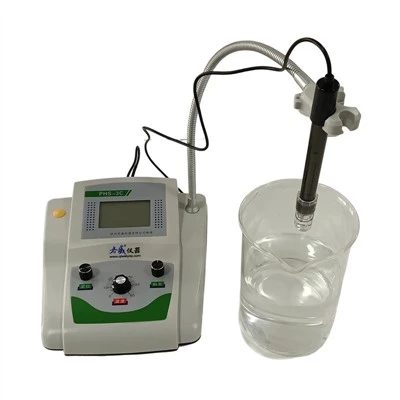
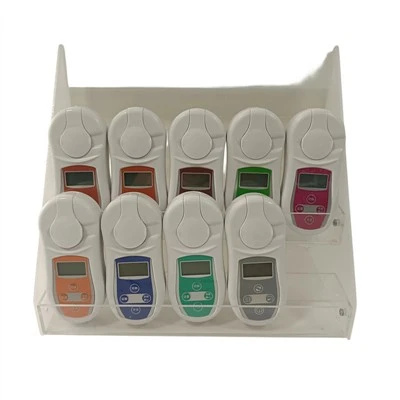
Wait, but can you get a handheld digital one, or are they all big and bulky? Nope—there are two main types, and both are digital, so don’t let the “handheld vs. benchtop” thing confuse you. Handheld digital EC meters are the ones you dip into your reservoir, take a reading, and rinse off. They’re portable, cheap (we sell our entry-level ones for under $50), and perfect for home growers or small systems. Benchtop ones are bigger, more accurate, have longer probes, and are made for larger setups like commercial farms or lab tanks. Both are digital, so that “are there digital EC meters?” question is easy: yes, both types exist, for every use case.
Now, let’s clear up a common myth I hear all the time: “Digital EC meters are too expensive.” I get it, if you’re just starting out, $50 for a meter sounds like a lot. But let’s compare to the alternative: if you’re growing in soil, you might not need an EC meter at all—but if you’re in hydro, a $20 analog meter that’s inaccurate could cost you a whole crop. I’ve seen customers drop $200 on nutrients because they were misreading their analog meter, whereas a $50 digital meter would have let them use nutrients properly. It’s an investment, not a cost.
Another thing: modern digital EC meters have extra features that analog ones can’t touch. Some have memory storage, so you can log readings over time to see if your reservoir’s EC is creeping up (which usually means you’re evaporating water without adding nutrients, so you need to top off with both water and nutrients). Some have Bluetooth, so you can sync readings to your phone and track trends over weeks—super useful for commercial growers who manage multiple reservoirs. Even our mid-tier handheld meters let you switch between EC and TDS (Total Dissolved Solids) readings, which is a bonus for people who want a quick estimate of total minerals.
But wait—are there any downsides to digital EC meters? Yeah, a couple. The probes can get dirty if you’re testing sediment-rich water, so you have to clean them after every use (we sell small cleaning kits for that). And if you drop a digital meter, the chip can break way easier than an analog one’s needle. But those are small nuisances compared to the accuracy and consistency you get. I’ve had customers use our digital meters for 3+ years as long as they take care of the probe, so they’re not flimsy.
Let’s circle back to the original question for anyone still on the fence. If you’re asking “are there digital EC meters?” because you’re tired of fighting analog needles and bad readings, the answer is not just “yes”—it’s that digital EC meters are the standard now for anyone who takes their growing or tank maintenance seriously. I started selling meters 8 years ago, and back then, digital was the fancy new thing. Now, 90% of the meters I sell are digital, because people finally realized you can’t rely on a needle for numbers that matter.
If you’re a home grower, a hobbyist aquarist, or someone looking to set up a small commercial operation, you don’t have to go all-in on a $500 benchtop meter. Our entry-level digital handheld meters are perfect for beginners—they’re calibrated out of the box, have ATC, and give you a clear reading in 10 seconds. No mess, no squinting, no second-guessing.
At the end of the day, EC is all about consistency. Whether you’re feeding a tomato plant, a clownfish, or a coral, you need to know exactly what’s in your water. Digital EC meters take the guesswork out of that.
If you’re ready to upgrade your setup or pick your first digital EC meter, feel free to reach out for a consultation. We can help you pick the right model for your needs, answer any questions about calibration or maintenance, and make sure you get something that works for you. No pushy sales stuff, just real advice from someone who’s been in this industry for years.
Water Quality Test Equipment References:
- Jones, A. (2022). “Electrical Conductivity in Hydroponic Systems: Accuracy and Calibration.” Journal of Commercial Horticulture, Vol. 18, No. 2, pp. 45–52.
- Lee, S. et al. (2021). “Automatic Temperature Compensation for Portable Water Quality Meters.” Aquaculture Engineering, Vol. 55, pp. 102–111.
- Miller, T. (2023). “Hobbyist Water Testing: Comparing Analog vs. Digital EC Meters.” Urban Grower Magazine, Spring Issue, pp. 18–22.
Hangzhou Qiwei Instrument Co., Ltd.
Hangzhou Qiwei Instrument Co., Ltd. is one of the most reliable manufacturers and suppliers of ec meter in China, featured by quality products and good service. Please rest assured to buy bulk durable ec meter in stock here from our factory. We also accept customized orders.
Address: Room 101, Building 25, No. 488-1, Donghu North Road, Linping District, Hangzhou City, Zhejiang Province, China
E-mail: info@qiweilab.com
WebSite: https://www.qiweilab.com/
