What is the UV resistance of FKM rubber sheet? FKM Rubber Sheet
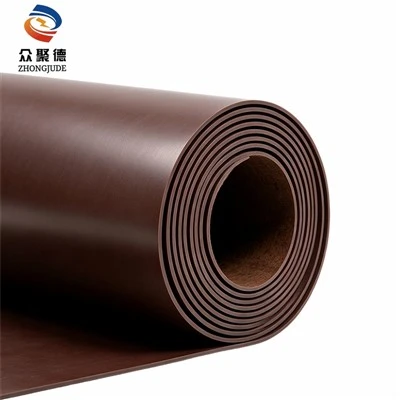
As a FKM rubber sheet supplier, I get this question all the time. It makes sense—anytime industrial rubber is going to be exposed to sunlight, outdoor elements, or UV radiation, you need to know it can hold up. FKM, also called fluorocarbon rubber, is famous for its heat and chemical resistance, but UV resistance is a specific angle that’s easy to gloss over if you’re only looking at the big-name benefits. Let’s break this down clearly, from how UV interacts with FKM to what you can expect from our sheets, and when it’s the right choice.
First, let’s get one basic fact straight: UV radiation is a form of energy that breaks down organic materials over time. Most rubbers—whether natural, EPDM, or even some other specialty types—work by cross-linked polymer chains that give them flexibility. UV rays carry enough energy to break those chains, a process called photo-degradation. When that happens, rubber loses elasticity, gets brittle, cracks, or even crumbles, especially in outdoor settings where sun exposure is constant, not just occasional.
Now, where does FKM stand here? FKM’s polymer structure is different from other rubbers. It’s made of carbon and fluorine atoms, with strong C-F bonds that are way more stable than the C-H bonds you’ll find in EPDM or natural rubber. That stability is the backbone of FKM’s resistance to most chemicals and high heat, but it also plays a role in how it reacts to UV. The good news first: unmodified FKM actually has decent inherent UV resistance. I’ve seen our standard FKM sheets last 5 to 10 years in moderate outdoor settings—think a shaded warehouse loading dock, or a truck bed cover that’s only exposed to direct sun a few hours a day, not all day every day. That’s way longer than, say, natural rubber, which might crack in 1 to 2 years in the same spot.
But wait—there’s a catch here. Not all FKM is the same. The UV resistance you get depends entirely on the formulation of the sheet. When I talk about FKM grades, there are common types: FKM 26, FKM 246, FKM 600, and specialty grades for specific environments. FKM 26, the most common general-purpose grade, has some UV resistance, but it’s not engineered for heavy sun exposure. FKM 246, which has a higher fluorine content, is a step up because those extra fluorine molecules add even more stability, so it handles UV a bit better. Then there are specialty FKM grades we make that include UV stabilizers—additives that absorb UV radiation before it can reach the polymer chains. That’s a game-changer for outdoor applications where UV is constant.
I’ll be honest with you: unmodified FKM will degrade over prolonged direct, unfiltered UV exposure. What I’ve seen in the field is that if FKM is left in full, year-round direct sunlight—like on a coastal building exterior, or a farm equipment part that’s out 24/7—even the best unmodified FKM will start showing signs of brittleness after 3 to 5 years. The surface might get chalky, which is a sign of polymer breakdown, and if there’s any flexing or movement (like a seal that opens and closes, or a sheet that’s stretched over a frame), it will crack faster. That’s where UV-stabilized FKM sheets come in. For those heavy outdoor jobs, our stabilized FKM sheets are formulated with carbon black or other UV blockers that extend their lifespan to 10 to 15 years in direct sun. I have a customer who uses our stabilized FKM for sunshade covers at a construction site in Arizona, where temperatures hit 110°F+ in summer—they’ve had the same sheets installed for 7 years, and they’re still flexible, no cracks, no chalky surface. That’s the difference formulation makes.
Now, let’s compare FKM’s UV resistance to other common rubbers to put it in perspective, because I know a lot of people cross-shop. EPDM is often used for outdoor roofing or window seals, and it’s cheap, but its UV resistance is good for about 5 to 7 years in direct sun, and it starts degrading in harsh conditions (like coastal salt air) faster than FKM. Silicone rubber is even more UV resistant—silicone can last 15 to 20 years in direct sun—but silicone has terrible chemical resistance, so if your application is near oils, fuels, or industrial chemicals, silicone won’t work. FKM hits a sweet spot: it’s not as UV resistant as silicone, but it’s way better at resisting chemicals and heat, and better than EPDM for heavy UV exposure. Natural rubber? UV resistance is so poor it’s basically only for indoor use—outdoors it’s a loss leader.
Another thing people ask me: does heat affect FKM’s UV resistance? Short answer: yes, but not in the way you might think. FKM already works at high temperatures, and UV degradation is worse at higher temperatures because the extra heat speeds up the chemical reaction of breaking down polymer chains. So if you’re in a hot, sunny environment—like the desert, or a factory roof that gets 140°F in summer—UV-stabilized FKM is non-negotiable. Our standard FKM 26, even with some UV stabilizers, will break down faster in that kind of heat than a stabilized FKM 246. I always tell customers: if your application is both hot and sunny, go with the highest FKM grade you can, with added UV stabilizers.
What about when FKM is exposed to UV plus chemicals? That’s a scenario I see a lot. For example, a chemical plant might use FKM sheets for equipment liners, and the parts of the liner near doors are exposed to both sunlight and spills of acids or oils. In that case, UV alone would be a minor factor, but combined with chemicals, it’s way worse. Chemicals can make the polymer more vulnerable to UV breakdown, so a stabilized FKM is even more important here. I’ve had customers test our stabilized FKM sheets in that exact scenario: 5 years of daily UV exposure and occasional acid spills, and the sheets were still functioning, whereas a non-stabilized sheet cracked after 2 years.
Now, let’s talk about how to test FKM’s UV resistance, because numbers matter. The standard test for UV resistance in rubber is ASTM G154, which exposes a sample to controlled UV radiation and heat, then tests for tensile strength and elongation at break. For FKM, a sample that maintains 70% of its original tensile strength after 1000 hours of ASTM G154 testing is considered good UV resistance. Our stabilized FKM sheets usually hit 1200 to 1500 hours, which is above that benchmark. Non-stabilized FKM is around 500 to 800 hours, so it’s lower, but still usable for low-exposure jobs. That’s a concrete number you can ask for when you’re picking FKM sheets—just ask your supplier for the ASTM G154 test results for their UV grades.
I also need to clear up a common misconception: some people think FKM is 100% UV proof, and that’s not true. It’s not. It will break down over time, just slower than most other rubbers. If you need something that never degrades, you’re looking at materials like Teflon or metal, but those are way more expensive and not flexible. FKM is the middle ground that works for most outdoor, chemical-resistant jobs.
So when should you choose FKM over another rubber for UV exposure? Let’s list the scenarios:
- Your part needs to resist chemicals (oils, fuels, acids) AND UV. FKM is better than EPDM here because EPDM’s chemical resistance is poor.
- You need long lifespan in moderate sun exposure (5 to 10 years). FKM’s inherent stability is perfect for that.
- You can’t afford to replace parts every 2 to 3 years. FKM costs a bit more upfront, but the lifespan is way longer, so total cost of ownership is lower.
When should you not choose FKM for UV? If your application is in extreme direct sun year-round, and you can sacrifice some chemical resistance for silicone or EPDM, or if you need a part that will last 20+ years without any maintenance. In those cases, we can point you to alternatives, but most of the time, FKM works.

As a supplier, I always test our FKM sheets before we send them out. We don’t just mix in a random UV stabilizer and call it good—we test every batch with ASTM G154, and we track real-world performance from customers across different climates. Last year, we had a customer in Miami, which is known for intense sun and salt air, order 1000 square feet of stabilized FKM sheets for outdoor pipe insulation. They just sent us a note saying they’re coming up on 4 years, and the sheets still look new. That’s the kind of proof I stand behind.
Electrical Insulation Rubber Mat Now, if you’re here because you’re looking for FKM rubber sheets for an application that involves UV exposure—whether it’s a roof liner, farm equipment part, outdoor seal, or something else—don’t guess. Reach out to discuss your specific needs. We can help you pick the right grade, whether it’s a standard FKM for low exposure, a stabilized grade for heavy sun, or a specialty mix for combined UV and chemical resistance. We’ll even send you test results so you know exactly what you’re getting.
References
- ASTM International. ASTM G154: Standard Practice for Operating Fluorescent Ultraviolet (UV) Lamp Apparatus for Exposure of Nonmetallic Materials. West Conshohocken, PA, 2021.
- Coran, A.Y. “Thermoplastic Elastomers and Specialty Rubbers.” In: Rubber Technology, 4th ed. CRC Press, 2019, pp. 317–356.
- Society of Automotive Engineers. SAE J200: Standard for Rubber Materials for Automotive Applications. Warrendale, PA, 2020.
- Mark, J.E. “Fluorocarbon Elastomers.” In: Physical Properties of Polymers Handbook, 3rd ed. Springer, 2007, pp. 675–688.
Hebei Zhongjude Power Technology Co., Ltd.
With abundant experience, we are one of the most reliable fkm rubber sheet manufacturers and suppliers in China. Welcome to buy bulk high quality fkm rubber sheet for sale here and get quotation from our factory. For price consultation, contact us.
Address: Shenghe Plaza, No. 88 Qilian Street, High-tech Zone, Shijiazhuang City, Hebei Province, China
E-mail: zhongjude@outlook.com
WebSite: https://www.zjdinsul.com/
