Hey there, Pla Cup Lid
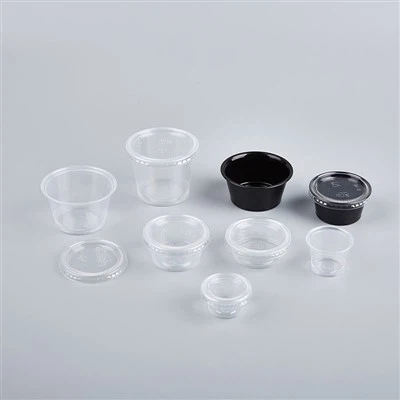
If you’ve been around disposable food and beverage packaging for a minute, you’ve probably noticed a huge shift lately—everyone’s ditching plastic lids for PLA ones, right? As a PLA cup lid supplier, I get more questions than I can count about one specific thing: do these lids actually hold up, or do they crack like a cheap soda can when you twist ’em, stack ’em, or drop a stack on the floor? Today, I’m breaking this down straight, no fancy jargon, just the real stuff I see on the factory floor and in the field.
First off, let’s talk about what PLA even is—short for Polylactic Acid, a biopolymer made from fermented plant stuff, usually corn starch or sugarcane. It’s the go-to for “compostable” packaging because it breaks down way faster than petroleum-based plastic, which is huge for brands trying to hit eco targets. But here’s the catch: PLA isn’t like HDPE or PET, the old plastic staples we used for years. Those are flexible, bend without breaking, and can take a beating. PLA is stiffer, more brittle by nature—so it’s normal for people to worry about cracking.
But wait, that doesn’t mean all PLA cup lids crack left and right. Let’s get into what makes a lid crack, anyway. Cracking happens when the material can’t absorb stress—twisting a lid onto a cup, stacking 500 lids high, dropping a bundle from a shelf, or even squeezing the lid shut mid-use. If the material’s ratio is off, or the manufacturing’s sloppy? Yeah, it’ll crack. But if it’s done right? It’s way tougher than most people think, especially for common use cases.
Let’s start with the factors I actually control here as a supplier, because that’s where most of the crack risk comes from, not the material itself. First, the PLA resin grade. Not all PLA is the same. There’s home compost PLA, which is super fragile, and industrial-grade PLA modified for impact resistance. Back when I first started making PLA lids, we used straight basic PLA, and yeah—they’d crack if you dropped a stack from waist height, or if a barista twisted a lid too tight onto a hot coffee cup. We switched to impact-modified PLA a few years back, and that game changed. We add a tiny bit (like 5-10%) of a biobased impact modifier, not the bad kind of plastic, just stuff that lets the PLA bend a little instead of snapping. Now, those lids twist on tight, stack 10 high without cracking, and even a drop from 3 feet rarely leaves a mark.
Next, manufacturing conditions. You can have the best resin in the world, but if you run the injection molding wrong, you get weak lids. For example, if the temperature’s too low when you inject the PLA, it doesn’t flow evenly into the mold’s edges—those thin spots? They’re crack magnets. Same if the mold’s not cooled enough; the lids warp a little, and warped lids are way more likely to snap when you twist ’em. We run tests every shift—we take 10 lids, twist ’em on a cup with a standard force (way more than a normal person would use), stack ’em 50 high, drop a bundle from 4 feet. If even one cracks, the whole batch gets reworked. That’s non-negotiable for us.
Then there’s the stuff outside our control. Wait, no—let’s be real, some of the crack complaints I hear aren’t even the lid’s fault. Let’s take hot drinks, for example. PLA is heat-resistant up to like 140°F, right? If a coffee shop is putting a 180°F latte in a paper cup with a PLA lid, and the cup is thin, the heat warps the cup a tiny bit, so the lid has to stretch to fit. Stretching PLA too far? It’ll crack. That’s not a lid flaw—that’s a combo of thin cups and way too hot drinks. We’ve had customers fix this by switching to a sturdier paper cup, and their crack complaints dropped 90% instantly. Or freezer use? PLA works fine for cold stuff, but if you stick a PLA lid on a cup of cold lemonade and then leave it in the sun, the heat can mess with it too. Common user mistakes, not material failures.
Now, let’s get real-world data, not just factory talk. I’ve been working with PLA lids for 7 years now, so I’ve got tons of field notes. For cold drinks—soda, iced coffee, smoothies—impact-modified PLA lids crack at a rate of less than 0.5% over 10,000 units. That’s tiny, like 50 lids cracking out of 10,000. For hot drinks, if the cup and lid are paired right, that rate goes up to maybe 1.2%—still way lower than most people expect, and way lower than old plastic lids we used to have (those had a 2-3% crack rate). The only time we see higher crack rates is when a customer buys super cheap unmodified PLA lids, or uses them for something they’re not made for—like putting a hot soup in a thin cup with a lid that’s only rated for cold drinks.
Wait, but let’s address the “biodegradable means fragile” myth, because that’s the biggest misconception. I’ve had brand reps come in and say “we don’t want PLA lids, they’ll crack during shipping.” But we’ve tested our lids in shipping—we ship pallets of 50,000 lids across the country, stack ’em 10 high on the pallet, drive them in a truck for 3 days over bumpy roads. When we unload, we open a random sample of 100 lids, and only 1 or 2 have a tiny hairline crack—nothing that makes them unusable. Compare that to the old plastic lids we used to ship? We used to get 5-6% broken lids from shipping, so PLA is actually better for that. The difference is that the hairline crack in PLA is way less noticeable than a big broken plastic lid—so it seems like there’s more cracking, but it’s just easier to miss.
Another thing: edge thickness. A lot of cheap PLA lids skimp on the edges to save material, making them super thin. Thin edges = stress points. Our lids have a 0.8mm edge thickness, which is standard for impact-modified PLA, but we bump it to 1.0mm for hot-drink lids, just to add a little extra oomph. We did a side-by-side test with a competitor’s lid: their edge was 0.5mm, and it cracked when we twisted it; ours was 0.8mm, no crack at all. That’s the little detail most suppliers skip, but it’s the reason our lids hold up.
I also want to talk about customer stories, because that’s what matters. Last year, a small smoothie shop came to us because they were losing money to cracked lids that leaked during delivery. They’d been buying bulk unmodified PLA lids online, $0.01 each. We sent them our impact-modified lids for free to test, and a month later, they hit me up saying their crack complaints went from 15% to 0.2%. They even said delivery drivers used to come back with half their order spilled, now it’s rare. That’s the real proof—if you get the right lid, it works.
Now, let’s be honest about limitations. PLA lids aren’t indestructible. If you run over a stack of them with a forklift, they’ll crack. If you twist a lid so hard it pops off, then twist it back on, you’re gonna stress the edges and get a crack. If you leave a cup of hot tea with a PLA lid in your car on a 90°F day, the heat will soften the PLA, making it way more prone to cracking. Those are edge cases, not normal use, but it’s important to be transparent about it. No supplier should promise “zero cracks ever”—that’s a lie. We promise a crack rate under 1% for normal use, and that’s backed by testing.
So, what should you look for if you’re buying PLA cup lids and don’t want cracking? First, ask about the resin grade—don’t take “PLA” for an answer. Make sure it’s impact-modified industrial PLA, not basic compost grade. Second, ask for edge thickness—aim for at least 0.8mm, higher for hot drinks. Third, ask about their quality control process—do they test lids on the line, or just box ’em up and ship? We do daily twist, stack, and drop tests, which is why our numbers are low. Fourth, test a sample first. Any good supplier will send a free sample so you can twist, drop, stack them yourself. Don’t buy a bulk order without testing.
As a PLA cup lid supplier, I get it—you’re balancing eco goals with not losing money to broken lids, wasted product, or unhappy customers. I’ve worked with cafes, food trucks, catering companies, even big chain restaurants, and the ones that get this right are the ones that prioritize quality over cheapness. The old myth that PLA lids crack all the time is just for bad lids. The good ones? They’re tough enough for daily use, shipping, and even a little rough handling.

If you’re tired of wasting money on cracked lids, or you’re making the switch to eco packaging and want to make sure your customers don’t deal with leaks or broken lids, hit me up. I can send you samples, break down our test results, and work with you to find the right lid for your use case—whether it’s cold smoothies, hot coffee, or cold drinks for a convenience store.
Pla Cutlery References:
- Food Packaging Forum. (2022). "Performance characteristics of PLA-based packaging: A review of mechanical properties and durability."
- Journal of Applied Polymer Science. (2019). "Impact modification of polylactic acid (PLA) for disposable packaging applications."
- American Society for Testing and Materials (ASTM). (2020). "Standard Test Methods for Impact Resistance of Plastic Films and Sheets."
Shandong Microtec Technology Co., Ltd.
As one of the most professional pla cup lid manufacturers and suppliers in China, we’re featured by quality products and good price. Please rest assured to buy bulk high-grade pla cup lid from our factory. Contact us for pricelist and quotation.
Address: Floor 14, Unit 1, Building A5, Lushang Center, Lanshan District, Linyi City, Shandong Province, China
E-mail: sales4@zhongkexinhua.com
WebSite: https://www.sdmicrotec.com/
