Yo! I’m a supplier of Seya – Namioka Flat – Field Concave Holographic Gratings. These babies are super important in lots of optical systems, from spectrometers to other high – tech gear. One question that comes up a lot is how temperature affects their performance. So, let’s dive right in and chat about it. Seya-Namioka Flat-Field Concave Holographic Grating

Basics of Seya – Namioka Flat – Field Concave Holographic Gratings
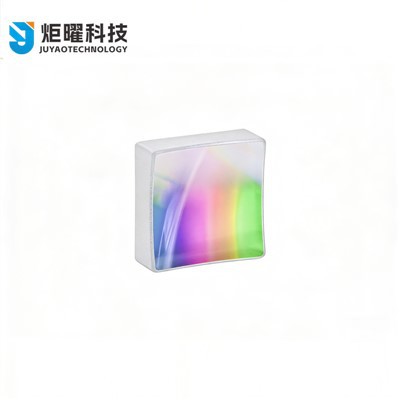
First off, a quick rundown of what these gratings are. A Seya – Namioka Flat – Field Concave Holographic Grating is designed to disperse light into its component wavelengths. The "flat – field" part means it can project a focused spectrum onto a flat surface, which is super handy for detectors. And the "holographic" bit? That means it’s made using holographic techniques, giving it some sweet properties like lower stray light and better efficiency compared to traditional ruled gratings.
Temperature and Material Expansion
The first thing temperature does is make materials expand or contract. Our gratings are usually made of materials like glass or some special alloys. When the temperature goes up, these materials expand. And when it drops, they contract.
Expansion or contraction can mess with the groove spacing on the grating. The groove spacing is what determines how light is diffracted. If that spacing changes even a tiny bit, it can throw off the diffraction angle of the light. So, the wavelength that used to hit the detector at a certain spot might now hit a different spot. That’s a big deal because our spectrometers and other systems are calibrated to read specific wavelengths at specific detector positions.
For example, if you’re using a Seya – Namioka grating in a spectrometer to analyze the chemical composition of a sample by looking at specific wavelengths of light, a temperature – induced change in the groove spacing can make it seem like the sample has different chemicals in it than it actually does. Not a good thing!
Refractive Index Changes
Another way temperature affects the grating is through changes in the refractive index of the grating material. The refractive index is a measure of how much the speed of light changes when it enters the material. Different wavelengths of light are affected differently by the refractive index.
As the temperature changes, the refractive index of the grating material changes too. This means that the way light bends as it passes through or reflects off the grating also changes. Just like with the groove spacing, this can lead to shifts in the diffraction angles of different wavelengths.
Let’s say you’re working in a lab where the temperature can vary a bit throughout the day. In the morning, when it’s cooler, your spectrometer might give you one set of readings. But as the day goes on and the temperature rises, the refractive index of the grating material changes, and suddenly your readings are off. You could end up thinking you’ve got a new discovery when really it’s just a temperature – induced change in the grating’s performance.
Thermal Stress
Temperature changes can also cause thermal stress in the grating. If one part of the grating heats up or cools down faster than another part, it creates stress within the material. This stress can lead to deformation of the grating surface.
A deformed grating surface is bad news. It can cause additional scattering of light, which means more stray light in your system. Stray light is like unwanted noise in an electrical circuit. It can reduce the signal – to – noise ratio of your measurements, making it harder to accurately detect and analyze the wavelengths of interest.
Imagine you’re trying to measure a very weak signal in a sample. The stray light caused by a thermally deformed grating can drown out that weak signal. You might not even be able to tell if the signal is there or not, which is a huge problem in scientific research and industrial applications.
Performance Degradation Over Time
Repeated temperature cycling can also cause long – term performance degradation of the Seya – Namioka Flat – Field Concave Holographic Gratings. Each time the grating goes through a temperature change, the materials expand and contract, and the refractive index changes. Over time, these repeated changes can cause microscopic damage to the grating structure.
This damage can accumulate, leading to a gradual decrease in the grating’s efficiency. The efficiency of a grating is a measure of how well it can diffract light into the desired orders. As the efficiency drops, you’ll need more light to get the same level of signal in your detector. This can be a problem if you’re working with a limited light source, like in some fluorescence or Raman spectroscopy applications.
Controlling Temperature Effects
Now, the good news is that there are ways to control these temperature effects. One way is to use temperature – controlled enclosures for the gratings. By keeping the temperature inside the enclosure constant, you can minimize the expansion, contraction, and refractive index changes of the grating material.
Another option is to use materials with low thermal expansion coefficients. Some advanced glass materials and alloys have very low coefficients of thermal expansion, which means they don’t expand or contract as much with temperature changes. Using these materials can reduce the sensitivity of the grating to temperature variations.
Why Our Seya – Namioka Flat – Field Concave Holographic Gratings Rock
So, why should you choose our gratings? Well, we take all these temperature factors into account during the manufacturing process. We use high – quality materials with low thermal expansion coefficients to make our gratings more stable with temperature changes.
We also have rigorous quality control processes. Before we ship out any grating, we test it under different temperature conditions to make sure it performs consistently. That way, you can trust that our gratings will work reliably in your optical systems, whether you’re in a hot, humid lab or a cold, dry environment.
Let’s Connect!
Flat-Field Concave Holographic Grating If you’re in the market for Seya – Namioka Flat – Field Concave Holographic Gratings, we’d love to chat. Whether you’re working on a research project, an industrial application, or anything else that needs a top – quality grating, we’ve got you covered. Reach out to us to start a discussion about your needs and how our gratings can fit into your system. We’re here to help you get the best performance possible.
References
- Smith, J. (2018). "Optical Grating Technology". Published by Optics Press.
- Brown, A. (2020). "Thermal Effects in Optical Components". Journal of Optical Science, Vol. 15, pp. 45 – 60.
- Johnson, M. (2021). "Holographic Gratings: Principles and Applications". Springer.
Jilin Juyao Technology Co., Ltd.
As one of the leading seya-namioka flat-field concave holographic grating manufacturers and suppliers in China, we offer a wide range of products with superior quality. Please feel free to wholesale customized seya-namioka flat-field concave holographic grating from our factory. Welcome to view our website for more information.
Address: Room 101, No. 2 Huiwen Road, Nanguan District, Changchun City, Jilin Province, China
E-mail: jyoptix@outlook.com
WebSite: https://www.jyoptix.com/
