Hey there! As a supplier of rock drills, I’ve gotten tons of questions from our customers about how to adjust the rotation speed of a rock drill. It’s a crucial aspect that can greatly impact the efficiency and effectiveness of your drilling operations. So, I thought I’d take the time to break it down for you all. Rock Drill
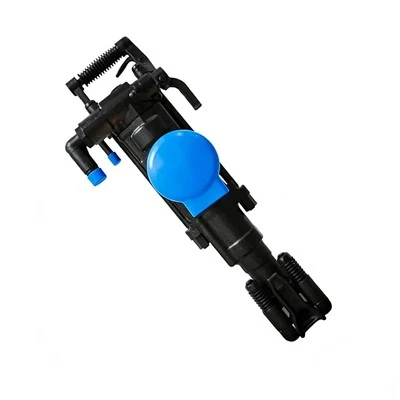
First off, let’s talk about why adjusting the rotation speed matters. Different drilling tasks call for different rotation speeds. For instance, when you’re starting a new hole, a lower rotation speed might be more suitable. This helps the drill bit to properly engage with the rock surface without slipping or causing too much damage to the bit. On the other hand, when you’re deep into the drilling process and the hole is well – established, a higher rotation speed can speed up the drilling and get the job done faster.
Now, let’s get into the nitty – gritty of how to actually adjust the rotation speed.
Understanding the Basics of Your Rock Drill
Before you start fiddling with the rotation speed, you need to understand your rock drill inside out. Most modern rock drills come with a control panel or a set of controls that allow you to adjust various parameters, including rotation speed. Take the time to read the user manual that came with your drill. It’ll have all the info about where the speed adjustment controls are located and how they work.
The type of power source your rock drill uses also matters. Electric rock drills often have speed control knobs or switches that are relatively easy to operate. You can usually adjust the speed by turning a knob or flipping a switch to increase or decrease the RPM (rotations per minute). Pneumatic rock drills, on the other hand, rely on air pressure to control the rotation speed. You’ll need to adjust the air flow rate using a regulator valve. The more air you let in, the faster the drill will rotate.
Adjusting for Different Rock Types
Not all rocks are created equal, and different rock types require different rotation speeds for optimal drilling.
Soft Rocks
When you’re drilling into soft rocks like sandstone or limestone, you can typically use a higher rotation speed. These rocks are easier to break through, so a faster rotation speed can help you get the job done quickly. You can start with a relatively high RPM setting and see how the drill performs. If you notice that the drill is vibrating too much or the bit is wearing out too fast, you might need to dial the speed back a bit.
Hard Rocks
Hard rocks like granite or basalt are a whole different ballgame. These rocks are much more resistant to drilling, so you’ll need to use a lower rotation speed. A slow and steady approach is key here. Using a high rotation speed on hard rocks can cause the drill bit to overheat, wear out prematurely, or even break. Start with a low RPM setting and gradually increase it as you see how the drill is cutting through the rock. You might also need to apply more pressure to the drill when working with hard rocks.
Step – by – Step Guide to Adjusting Rotation Speed
Let’s go through a step – by – step process for adjusting the rotation speed of your rock drill.
- Power Off
Before you start making any adjustments, make sure the rock drill is powered off. This is a safety precaution to prevent any accidental starts that could cause injury. - Locate the Speed Control
As I mentioned earlier, find the speed control mechanism on your drill. It could be a knob, a switch, or a regulator valve depending on the type of drill you have. - Identify the Starting Point
Refer to the user manual to find the recommended starting speed for your specific drilling task. This is a good baseline to start from. - Make Small Adjustments
Don’t make big jumps in speed right away. Instead, make small adjustments and test the drill after each change. Observe how the drill is performing, such as how smoothly it’s drilling and how much resistance it’s encountering. - Monitor the Drill Bit
Keep an eye on the drill bit during the process. If the bit starts to overheat, smoke, or show signs of excessive wear, it’s a sign that the rotation speed might be too high. In this case, reduce the speed immediately. - Fine – Tune as Needed
Based on your observations, continue to fine – tune the rotation speed until you find the optimal setting for your drilling task.
Tips and Tricks for Optimal Rotation Speed Adjustment
Here are some additional tips to help you get the most out of your rock drill’s rotation speed adjustment:
- Keep the Drill Bit Sharp A dull drill bit will require more power and might not cut through the rock as efficiently. Make sure to sharpen or replace the drill bit regularly to ensure smooth drilling at the right speed.
- Be Patient Adjusting the rotation speed is not an exact science, and it might take a few tries to find the perfect setting. Don’t rush the process and take the time to get it right.
- Maintain Your Drill Regular maintenance of your rock drill is essential. This includes cleaning, lubricating, and checking for any loose parts. A well – maintained drill will perform better and allow for more accurate speed adjustments.
Conclusion

Adjusting the rotation speed of a rock drill is a skill that can make a big difference in your drilling operations. By understanding your drill, knowing the right speeds for different rock types, and following the step – by – step process, you can ensure that you’re getting the most out of your equipment.
Button Bit If you’re in the market for a new rock drill or have any questions about adjusting rotation speeds, don’t hesitate to reach out to us. We’re here to help you find the perfect solution for your drilling needs. Whether you’re a professional contractor or a DIY enthusiast, we’ve got the expertise and the high – quality products to support you. Contact us to start a discussion about your requirements and let’s work together to get your drilling projects done right.
References
- Various rock drill user manuals
- Industry – specific literature on rock drilling techniques.
Super Rock Machinery Equipment (Qingdao) Co., Ltd.
We are one of the most professional rock drill manufacturers and suppliers in China, featured by quality products and good price. Please feel free to buy advanced rock drill for sale here from our factory. Welcome to view our website for more information.
Address: No. 45, Pengwan Road, Qianwan Bonded Port Area, Qingdao Sub-district, Free Trade Pilot Zone, Shandong China
E-mail: sales@superrocktools.com
WebSite: https://www.superrocktools.com/
